Health · · 7 min read
Are Goldendoodles Hypoallergenic? Allergy Costs & What Insurance Covers
Marketed as hypoallergenic, Goldendoodles still get costly skin allergies and atopic dermatitis. Real treatment costs and what insurance covers.
By Allen Lee, Founder · GoldendoodleInsurance.com
Last updated: · Reviewed by Allen Lee, Founder, Best Dog Insurance LLC
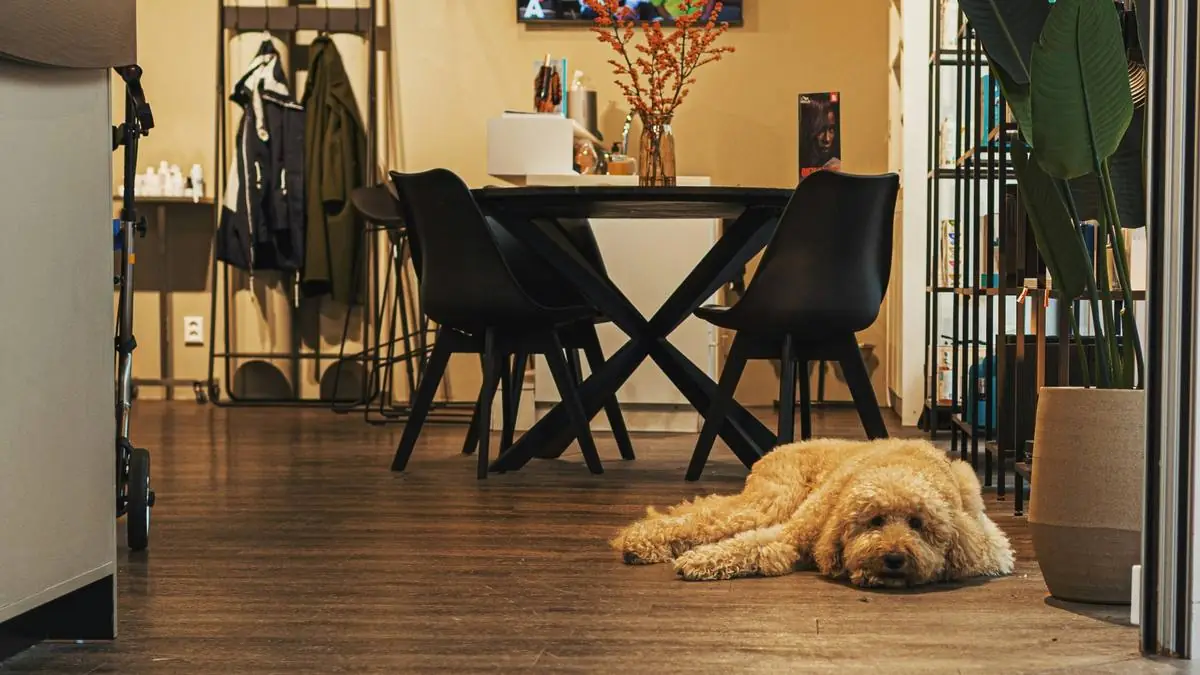
One of the biggest reasons people choose Goldendoodles is the belief that they're hypoallergenic. While no dog is truly 100% hypoallergenic, Goldendoodles do tend to produce fewer allergens than many other breeds thanks to their Poodle heritage. Understanding what "hypoallergenic" really means — and the health costs that come with Goldendoodle coat maintenance — helps you make an informed decision about both the breed and your insurance coverage.
| Allergy Type | Treatment | Annual Cost |
|---|---|---|
| Atopic dermatitis | Apoquel / Cytopoint / Atopica | $600–$2,400 |
| Food allergy | Hydrolyzed prescription diet | $1,200–$2,400 |
| Flea allergy dermatitis | Prevention + treatment | $200–$600 |
| Allergy testing (IDT/serum) | Diagnostic, one-time | $200–$800 |
| Immunotherapy | Custom allergy shots/drops | $1,000–$1,800 |
Figures summarize published plan documents and national cost data reviewed in . Carrier terms, limits, and pricing change without notice and vary by state, pet age, and plan settings. This is not a quote or an offer of insurance — verify details directly with the provider.
What Does Hypoallergenic Actually Mean?
The term "hypoallergenic" doesn't mean allergen-free. It means a dog produces fewer allergens than average. The primary dog allergen, Can f 1, is found in saliva, urine, and dander — not fur itself. However, fur acts as a vehicle for spreading these allergens around your home. Goldendoodles with curlier, Poodle-like coats trap dander in their fur instead of releasing it into the air, which is why allergy sufferers often tolerate them better.
Individual reactions vary widely. Some people with mild allergies do wonderfully with Goldendoodles, while others with severe allergies may still react. Before committing to a Goldendoodle puppy, spend time with the specific dog to test your sensitivity. Reputable breeders often allow allergy-test visits for this exact reason.
How Does Coat Type Affect Goldendoodle Allergen Levels?
Not all Goldendoodles have the same coat type, and the coat directly impacts how hypoallergenic the dog is:
- Curly coat (most Poodle-like): Lowest shedding, traps the most dander. Best for allergy sufferers. Requires professional grooming every 4–6 weeks ($60–$120 per session).
- Wavy/fleece coat: Moderate shedding, good for mild allergy sufferers. The most common Goldendoodle coat type. Grooming every 6–8 weeks ($50–$100).
- Straight/flat coat (most Retriever-like): Sheds the most, least hypoallergenic. Less grooming-intensive but distributes more dander. Grooming every 8–12 weeks ($40–$80).
Generation also plays a role: F1B Goldendoodles (75% Poodle) are more likely to have curly, low-shedding coats compared to F1 Goldendoodles (50/50 cross). If allergies are your primary concern, an F1B or multigen Goldendoodle with a curly coat is your best bet.
What Are the Health Costs of Maintaining a Goldendoodle Coat?
Maintaining a Goldendoodle's hypoallergenic coat costs $480–$1,440 per year for professional grooming alone, with additional expenses for tools ($30–$80), medicated shampoos, and skin allergy treatment ($200–$1,500). Owners should budget $600–$2,000+ annually when recurring skin conditions are factored in.
- Professional grooming: $480–$1,440/year (every 4–8 weeks depending on coat type)
- Grooming tools (brushes, detangling spray): $30–$80/year
- Medicated shampoos (if skin issues arise): $15–$40 per bottle
- Skin allergy treatment: $200–$1,500/year if your Goldendoodle develops dermatitis or hot spots
Goldendoodles are prone to skin conditions precisely because of their dense coats. Moisture trapped near the skin can lead to bacterial infections and hot spots, especially in humid climates or after swimming. Regular brushing (3–4 times per week minimum) is essential to prevent matting, which can hide skin problems until they become severe.
What Allergy-Related Health Issues Are Common in Goldendoodles?
Ironically, while Goldendoodles may be better for owners with allergies, the breed itself is prone to allergies. Environmental allergens (pollen, dust mites, mold) and food allergies are common, with symptoms including:
- Excessive itching and scratching
- Red, inflamed skin (especially ears, paws, and belly)
- Chronic ear infections — Goldendoodles' floppy ears trap moisture and allergens
- Paw licking and chewing
- Recurring hot spots
Allergy testing and treatment can cost $300–$1,500 initially, with ongoing immunotherapy or prescription diets adding $50–$200 per month. This is where pet insurance becomes particularly valuable for Goldendoodle owners.
Does Pet Insurance Cover Allergy-Related Costs?
Most comprehensive pet insurance plans cover allergy diagnosis and treatment, including:
- Allergy testing: Blood panels and intradermal skin tests ($200–$500)
- Prescription medications: Apoquel, Cytopoint injections ($50–$150/month)
- Specialist dermatology visits: $150–$400 per consultation
- Prescription diets: Some plans cover medically necessary food
However, standard plans do not cover routine grooming. Some wellness add-ons include grooming allowances, but these are rare. The biggest value of insurance for allergy-prone Goldendoodles is covering the diagnostic workup and ongoing treatment, which can easily exceed $2,000 annually for severe cases.
Should You Budget Extra for a Hypoallergenic Goldendoodle?
Goldendoodles are among the most allergy-friendly breeds, but that comes with higher maintenance costs compared to short-coated breeds. Budget $600–$1,500 annually for grooming alone, and consider enrolling in a comprehensive insurance plan early to cover the breed's tendency toward skin allergies and ear infections. Check our Goldendoodle Insurance Cost Calculator to see personalized estimates, and read the Buyer's Guide to compare the best plans for allergy-prone breeds.
Which Goldendoodle Generation Is Best for Allergy Sufferers?
F1B Goldendoodles (75% Poodle) are the best choice for allergy sufferers, offering the highest probability of a non-shedding, low-allergen coat. Multigen Goldendoodles from established lines also provide strong predictability. Avoid F2 crosses if allergies are your primary concern — coat outcomes are most variable in that generation, increasing the risk of an incompatible match.
Before committing, request an allergy-test visit with the specific puppy you're considering. Spend at least 30–60 minutes in close contact, including holding and petting the dog in an enclosed space. If you don't react during the visit, you're likely a good match. Some breeders will also send home a blanket the puppy has slept on so you can test your reaction at home over several days. Taking these precautions helps avoid the heartbreaking situation of having to rehome a dog due to allergy incompatibility.
Frequently Asked Questions
Are Goldendoodles truly hypoallergenic?
No dog is 100% hypoallergenic. Goldendoodles produce less dander than many breeds, but F1 Goldendoodles (50% Golden Retriever) shed more than F1B or Multigen. Curly-coated Goldendoodles are the most allergy-friendly, while flat-coated ones shed similarly to Golden Retrievers.
How much do Goldendoodle allergy treatments cost?
Skin allergy management costs $500–$3,000/year depending on severity. Allergy testing runs $200–$500, immunotherapy $300–$600/year, Apoquel medication $2–$3/day ($700–$1,100/year), and Cytopoint injections $50–$150 every 4–8 weeks.
What types of allergies are common in Goldendoodles?
Goldendoodles commonly develop environmental allergies (pollen, dust mites, mold), food allergies (chicken, beef, grains), and contact allergies. Atopic dermatitis — chronic itchy, inflamed skin — is the most prevalent, often appearing between 1 and 3 years of age.
Does pet insurance cover allergy treatment for Goldendoodles?
Yes, most comprehensive policies cover allergy diagnosis and treatment including allergy testing, prescription medications like Apoquel and Cytopoint, prescription diets when medically necessary, and dermatology specialist visits. Enroll before symptoms appear to avoid pre-existing exclusions.
Wondering what coverage looks like for your Goldendoodle?
Compare plan options in a couple of minutes, or estimate your monthly premium first.
Get a free Goldendoodle insurance quote · Estimate your premium
Advertiser disclosure: GoldendoodleInsurance.com is an independent comparison website — not an insurance company, agency, or producer. We do not sell, issue, or bind policies. We may earn a commission when you click carrier links, at no cost to you. Advertising Disclosure · Editorial Policy.
Sources & References
Premium figures are sample quotes from public provider quoting tools and are illustrative only; medical details are summarized from the veterinary references below and are educational, not veterinary advice.
- Merck Veterinary Manual. Allergies in Dogs.
- Cornell University College of Veterinary Medicine. Atopic Dermatitis in Dogs.
- American Veterinary Medical Association (AVMA). Allergies in Pets.
Pricing sources and data vintage
Cost figures on this page are national ranges, not quotes. Each one below is tied to a named publisher and the date we last verified it. Pricing data set: . Next scheduled re-verification: February 2027.
| Figure | Published range | What it covers | Source & date verified |
|---|---|---|---|
| Monthly premium, Goldendoodle accident & illness plan | $25–$70/month | Quotes sampled across ten U.S. carriers for Mini/Medium/Standard profiles at 80–90% reimbursement, $250–$500 annual deductible. Mid-range figure ≈ $45/month. | NAPHIA (North American Pet Health Insurance Association) — State of the Industry Report — average U.S. premiums by coverage type (2026 report). Verified Aug 2026. |
| Hip dysplasia surgery (FHO or total hip replacement) | $3,500–$7,000 per hip | Specialty and teaching-hospital surgical pricing, single hip, including imaging, implant, anesthesia, and post-op rehab. | American Veterinary Medical Association (AVMA) — Cost of veterinary care references / orthopedic procedure benchmarks (2026 guidance). Verified Aug 2026. |
| Bloat (GDV) emergency surgery | $3,000–$7,500 | Emergency gastric decompression, derotation, and gastropexy with 24-hour critical care. Overnight ICU drives the upper end. | Merck Veterinary Manual — Gastric dilation and volvulus in dogs (Current edition, 2026). Verified Aug 2026. |
| Addison's disease (hypoadrenocorticism) maintenance | $200–$500/month | Desoxycorticosterone pivalate injections or fludrocortisone plus prednisone, with periodic electrolyte monitoring. Dose scales with body weight. | American College of Veterinary Internal Medicine (ACVIM) — Consensus statement on canine hypoadrenocorticism (Consensus statement, latest revision). Verified Aug 2026. |
| Lifetime veterinary spend, Goldendoodle | $15,000–$30,000 | Routine care plus expected illness and emergency claims across a 10–14 year lifespan, before insurance reimbursement. | American Veterinary Medical Association (AVMA) — Pet ownership and cost-of-care data (2026 guidance). Verified Aug 2026. |
Veterinary pricing varies by region, clinic type, and case complexity; insurance premiums vary by ZIP code, age, deductible, and reimbursement level. Treat every range as a planning benchmark and confirm current pricing with your veterinarian and current premiums with the provider. Our sourcing rules are documented in the editorial policy.