Breed Info · · 8 min read
Goldendoodle Generations Explained: F1 vs. F1B vs. F2 vs. Multigen
F1, F1B, F2, Multigen — what do they mean? Each generation has different coat types, shedding, health risks, and insurance costs. Full breakdown.
By Allen Lee, Founder · GoldendoodleInsurance.com
Last updated: · Reviewed by Allen Lee, Founder, Best Dog Insurance LLC
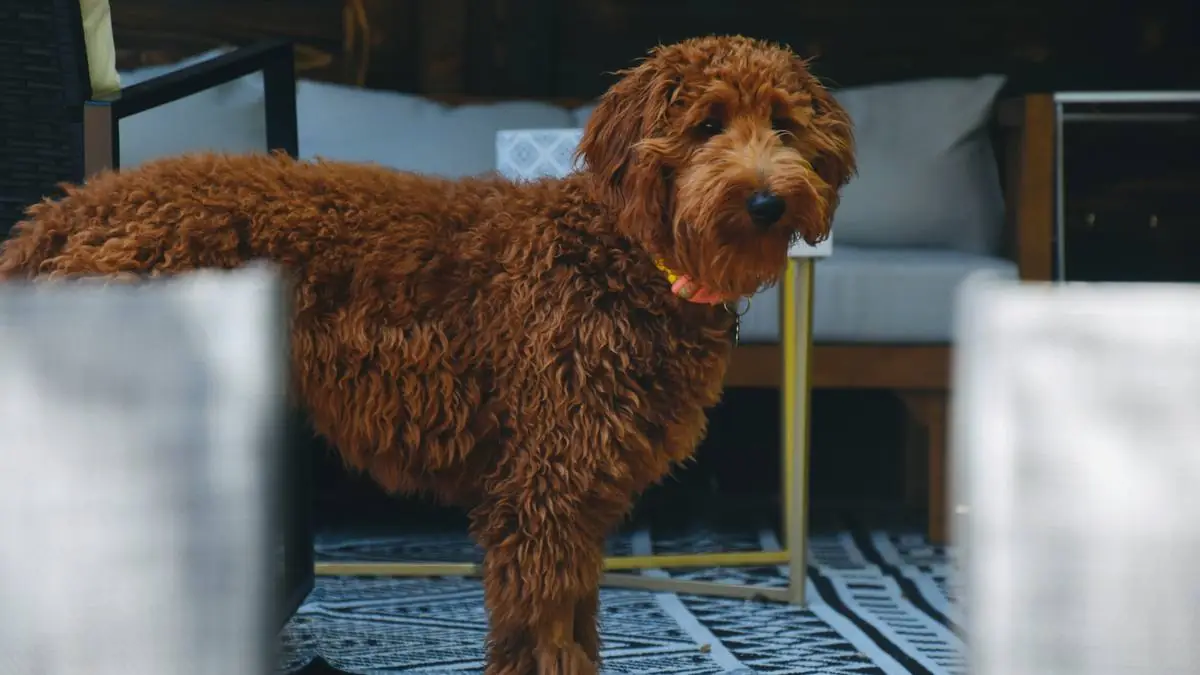
Understanding Goldendoodle generations is essential when choosing a puppy, as the generation directly affects coat type, shedding level, temperament, and health. The alphabet-soup labels — F1, F1B, F1BB, F2, F2B, and multigen — describe the specific cross between Golden Retriever and Poodle genetics in each dog's lineage. Each generation comes with distinct advantages and trade-offs that also influence insurance costs and health risks.
| Generation | Cross | Coat | Shedding | Hip Dysplasia Risk |
|---|---|---|---|---|
| F1 | Golden × Poodle (50/50) | Wavy | Moderate | Highest (~20%) |
| F1B | F1 × Poodle (25/75) | Curly | Low | Lower (~12–15%) |
| F2 | F1 × F1 | Variable | Variable | High (~18%) |
| F2B | F2 × Poodle | Curly | Low | Lower (~12%) |
| Multigen | F1B+ × F1B+ | Curly (most consistent) | Lowest | Lowest (~10–12%) |
Figures summarize published plan documents and national cost data reviewed in . Carrier terms, limits, and pricing change without notice and vary by state, pet age, and plan settings. This is not a quote or an offer of insurance — verify details directly with the provider.
What Do Goldendoodle Generation Labels Mean?
The "F" stands for "filial" (offspring), and the number indicates the generation:
- F1 Goldendoodle: First-generation cross. Golden Retriever × Poodle (50/50 genetics). Maximum hybrid vigor. Most variable coats — can range from flat/shedding to wavy to curly. Best genetic diversity but least predictable appearance.
- F1B Goldendoodle: F1 Goldendoodle × Poodle (75% Poodle, 25% Golden Retriever). The most popular generation for allergy sufferers. Curlier, more predictable low-shedding coats. Slightly less hybrid vigor than F1.
- F1BB Goldendoodle: F1B Goldendoodle × Poodle (87.5% Poodle). Maximum curl and lowest shedding. Most Poodle-like in appearance and temperament. Less Golden Retriever influence.
- F2 Goldendoodle: F1 Goldendoodle × F1 Goldendoodle (still 50/50 genetics but second generation). Most unpredictable coats — puppies in the same litter can range from flat-coated shedders to tight curls. Less hybrid vigor than F1.
- F2B Goldendoodle: F1 Goldendoodle × F1B Goldendoodle (62.5% Poodle). Moderate predictability. Generally wavy to curly coats.
- Multigen Goldendoodle: Any cross beyond second generation. Most predictable traits when from established breeding programs. Coat and temperament consistency is highest in multigenerational lines.
How Does Generation Affect Coat Type and Allergen Levels?
Goldendoodle generation directly determines coat predictability for allergy sufferers: F1B dogs (75% Poodle) have an 80–90% probability of low-shedding curly coats, making them the safest bet for allergy sufferers, while F1 dogs (50% Poodle) are only about 50% likely to have low-shedding coats. F1BB and multigen lines offer 90%+ probability of non-shedding coats but require the most grooming.
- F1: Approximately 50% will have low-shedding coats. Others may shed moderately. Not guaranteed hypoallergenic.
- F1B: Approximately 80–90% will have curly, low-shedding coats. The safest bet for allergy sufferers who still want Golden Retriever traits.
- F1BB/Multigen: Highest probability of non-shedding coats (90%+), but most Poodle-like in appearance.
- F2: Most variable. Some breeders avoid F2 crosses because the coat outcomes are so unpredictable.
Keep in mind that curlier coats require more frequent professional grooming ($60–$120 every 4–6 weeks), so lower shedding comes with higher maintenance costs.
What Are the Health Differences Between Goldendoodle Generations?
Hybrid vigor — the health benefit of crossing two genetically distinct breeds — is strongest in first-generation (F1) crosses and diminishes in subsequent generations:
- F1: Maximum hybrid vigor. Lower rates of breed-specific genetic conditions compared to either parent breed. Still at risk for conditions common to both parent breeds (hip dysplasia, PRA).
- F1B: Good hybrid vigor, but increased Poodle-specific risks including Addison's disease, luxating patella (minis), and sebaceous adenitis.
- F2 and beyond: Reduced hybrid vigor. May see increased rates of conditions from either parent breed. Health testing of breeding parents becomes even more critical.
- Multigen: When bred responsibly with comprehensive health testing, multigenerational lines can be very healthy. However, poorly managed multigen programs risk concentrating genetic disorders.
How Does Generation Affect Goldendoodle Size?
Goldendoodle generation significantly affects size predictability: F1 standard crosses are the most variable (45–90 lbs), while F1B minis are more consistent (15–35 lbs) due to miniature Poodle influence. Multigen Goldendoodles from established breeding programs offer the most reliable size outcomes across all size categories.
- F1 Standard: Most variable size range (45–90 lbs). Difficult to predict adult size from puppy weight.
- F1B Mini: More predictable sizing (15–35 lbs) due to the miniature Poodle influence.
- Multigen: Most predictable sizing, especially from established breeding programs that have refined their lines over multiple generations.
Does Goldendoodle Generation Affect Insurance Cost?
Most pet insurance companies classify all Goldendoodles the same regardless of generation, but some nuances exist. F1 Goldendoodles may face slightly different health risks than F1B or F2 Goldendoodles, though premiums are generally based on size, age, and location rather than generation. The most important insurance consideration is enrolling early — regardless of generation — to avoid pre-existing condition exclusions. Use our Cost Calculator for personalized premium estimates and the Buyer's Guide to compare the best plans for your specific Goldendoodle.
F1 vs F2 Goldendoodle: Direct Comparison
F1 and F2 Goldendoodles share the same 50/50 Golden Retriever and Poodle genetic ratio, but the way that ratio is expressed is very different. An F1 is a first-generation cross (one Golden Retriever × one Poodle) with maximum hybrid vigor. An F2 is a second-generation cross (F1 × F1) that reshuffles the same genes — often producing wider variation and less hybrid-vigor protection against inherited disease.
| Trait | F1 Goldendoodle | F2 Goldendoodle |
|---|---|---|
| Parents | Golden Retriever × Poodle | F1 Goldendoodle × F1 Goldendoodle |
| Genetics | 50% Golden / 50% Poodle | 50% Golden / 50% Poodle (reshuffled) |
| Hybrid vigor | Strongest | Reduced |
| Coat predictability | Moderate — usually wavy | Lowest — flat, wavy, or curly in the same litter |
| Shedding | Low to moderate | Highly variable |
| Allergy-friendly | Sometimes | Unpredictable — not recommended for allergies |
| Size predictability | Moderate | Lowest of any common generation |
| Health risk | Standard breed risks, cushioned by hybrid vigor | Elevated — double-dose risk on hip dysplasia, PRA, SAS |
| Price (2026) | $2,000–$3,500 | $1,800–$3,200 |
| Insurance premium | Baseline | Comparable, sometimes slightly higher due to orthopedic risk |
Health Differences Between F1 and F2 Goldendoodles
The single biggest reason to understand F1 vs F2 is health. Because F2 puppies inherit genes from two F1 parents, they can receive double copies of recessive risk genes from either parent breed. In practice that means:
- Hip and elbow dysplasia: F2s have a modestly higher observed rate than F1s, especially in standard sizes.
- Progressive retinal atrophy (PRA): Both F1 parents can silently carry PRA. Without genetic testing on both parents, F2 puppies have a real chance of double inheritance.
- Sub-aortic stenosis (SAS): This heart condition is present in both parent breeds. F2 crosses concentrate the risk.
- Coat and skin issues: Flat-coated F2s inherit Golden Retriever skin-and-ear risk; curly-coated F2s inherit Poodle sebaceous adenitis and matting risk.
F1s aren't risk-free — they still develop hip dysplasia, allergies, and cancer — but the first-cross hybrid vigor generally reduces severe expression of recessive conditions. This is why breeders who prioritize health tend to focus on F1 and well-planned multigen lines rather than F2.
Which Generation Should You Choose — F1 or F2?
- Choose F1 if you want the healthiest first-cross genetics, more predictable size, and a moderately wavy coat.
- Choose F2 only from a breeder that health-tests both F1 parents (OFA hips, cardiac, and PRA panel at minimum). Never buy an F2 sight-unseen — request video of the litter and confirm the coat type you can live with.
For the full generation-by-generation insurance breakdown, see F1 Goldendoodle Insurance and F2 Goldendoodle Insurance, or run a personalized estimate in the Cost Calculator.
Which Goldendoodle Generation Is Right for Your Lifestyle?
The "best" Goldendoodle generation depends entirely on your priorities and lifestyle. Here's a decision framework:
- Allergy sufferers: F1B or F1BB is your safest choice. The higher Poodle percentage gives you the best odds of a non-shedding coat. Accept higher grooming costs as part of the trade-off.
- Families wanting the "classic" Goldendoodle look: F1 offers the most balanced blend of Golden Retriever and Poodle traits — the signature teddy bear face with a wavy, manageable coat. Accept that shedding is unpredictable.
- First-time dog owners: Multigen from an established breeder provides the most predictable temperament and coat type, reducing surprises during the first year.
- Health-conscious owners: F1 offers maximum hybrid vigor. Pair this with thorough breeder vetting and comprehensive health testing for the best health outcomes.
Regardless of generation, early pet insurance enrollment is essential. Most generation-specific health risks (joint conditions in F1Bs, broader genetic conditions in F2s) develop within the first 2–5 years. Enrolling as a puppy, before any symptoms are documented, gives eligible breed-related conditions the best chance of being covered once waiting periods have passed. The 14-day illness waiting period and 6-month orthopedic waiting period apply equally across all generations, so the earlier you enroll, the sooner full coverage begins.
Frequently Asked Questions
What does F1, F1B, and F2 mean for Goldendoodles?
F1 means first-generation cross (50% Golden Retriever, 50% Poodle). F1B means backcross with a Poodle (25% Golden, 75% Poodle). F2 means two F1 parents bred together (50/50 but more genetic variability). Multigen means multiple generations of Goldendoodle-to-Goldendoodle or Goldendoodle-to-Poodle breeding.
Which Goldendoodle generation is healthiest?
F1 Goldendoodles may benefit from "hybrid vigor" — the health advantage of crossing two distinct breeds. This advantage diminishes with each subsequent generation. However, responsible health testing of parent dogs matters far more than generation for predicting individual puppy health.
Does Goldendoodle generation affect insurance costs?
Insurance companies don't typically differentiate by generation — they classify all Goldendoodles the same (or as mixed breed). However, generation affects health risks: F1Bs have higher Addison's risk (more Poodle), while F1s have higher cancer risk (more Golden Retriever). Your vet records determine what's covered.
Which Goldendoodle generation sheds the least?
F1B (75% Poodle) and Multigen Goldendoodles with curly coats shed the least and are the most allergy-friendly. F1 Goldendoodles have the most unpredictable coats — some shed heavily, others minimally. F2 Goldendoodles have the highest coat variability, with some puppies having flat, shedding coats.
Wondering what coverage looks like for your Goldendoodle?
Compare plan options in a couple of minutes, or estimate your monthly premium first.
Get a free Goldendoodle insurance quote · Estimate your premium
Advertiser disclosure: GoldendoodleInsurance.com is an independent comparison website — not an insurance company, agency, or producer. We do not sell, issue, or bind policies. We may earn a commission when you click carrier links, at no cost to you. Advertising Disclosure · Editorial Policy.
Sources & References
Premium figures are sample quotes from public provider quoting tools and are illustrative only; medical details are summarized from the veterinary references below and are educational, not veterinary advice.
- American Kennel Club (AKC). Designer Dog Breed Generations.
- Orthopedic Foundation for Animals (OFA). Breed-Specific Hip & Elbow Statistics.
Pricing sources and data vintage
Cost figures on this page are national ranges, not quotes. Each one below is tied to a named publisher and the date we last verified it. Pricing data set: . Next scheduled re-verification: February 2027.
| Figure | Published range | What it covers | Source & date verified |
|---|---|---|---|
| Monthly premium, Goldendoodle accident & illness plan | $25–$70/month | Quotes sampled across ten U.S. carriers for Mini/Medium/Standard profiles at 80–90% reimbursement, $250–$500 annual deductible. Mid-range figure ≈ $45/month. | NAPHIA (North American Pet Health Insurance Association) — State of the Industry Report — average U.S. premiums by coverage type (2026 report). Verified Aug 2026. |
| Hip dysplasia surgery (FHO or total hip replacement) | $3,500–$7,000 per hip | Specialty and teaching-hospital surgical pricing, single hip, including imaging, implant, anesthesia, and post-op rehab. | American Veterinary Medical Association (AVMA) — Cost of veterinary care references / orthopedic procedure benchmarks (2026 guidance). Verified Aug 2026. |
| Bloat (GDV) emergency surgery | $3,000–$7,500 | Emergency gastric decompression, derotation, and gastropexy with 24-hour critical care. Overnight ICU drives the upper end. | Merck Veterinary Manual — Gastric dilation and volvulus in dogs (Current edition, 2026). Verified Aug 2026. |
| Addison's disease (hypoadrenocorticism) maintenance | $200–$500/month | Desoxycorticosterone pivalate injections or fludrocortisone plus prednisone, with periodic electrolyte monitoring. Dose scales with body weight. | American College of Veterinary Internal Medicine (ACVIM) — Consensus statement on canine hypoadrenocorticism (Consensus statement, latest revision). Verified Aug 2026. |
| Lifetime veterinary spend, Goldendoodle | $15,000–$30,000 | Routine care plus expected illness and emergency claims across a 10–14 year lifespan, before insurance reimbursement. | American Veterinary Medical Association (AVMA) — Pet ownership and cost-of-care data (2026 guidance). Verified Aug 2026. |
Veterinary pricing varies by region, clinic type, and case complexity; insurance premiums vary by ZIP code, age, deductible, and reimbursement level. Treat every range as a planning benchmark and confirm current pricing with your veterinarian and current premiums with the provider. Our sourcing rules are documented in the editorial policy.