Care & Costs · · 7 min read
Goldendoodle Coat Types Explained: Flat, Wavy & Curly Grooming Guide
Flat, wavy, or curly? Coat type determines grooming costs, matting risk, and skin health expenses. Identify your Goldendoodle's coat type.
By Allen Lee, Founder · GoldendoodleInsurance.com
Last updated: · Reviewed by Allen Lee, Founder, Best Dog Insurance LLC
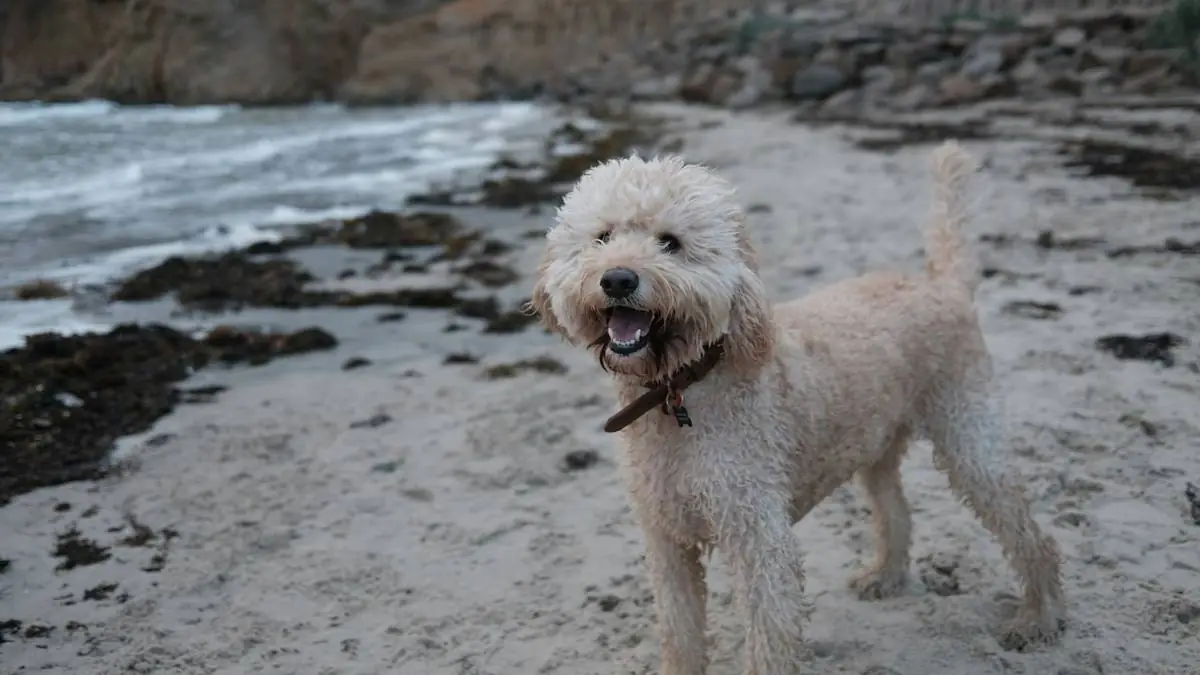
Goldendoodle coats are one of the breed's most defining features — and also one of the most misunderstood. The type of coat your Goldendoodle has affects everything from shedding and allergen levels to grooming costs, maintenance time, and even skin health. Understanding the three main coat types, how they develop, and what each requires helps you prepare for the grooming commitment and make informed decisions when choosing a puppy.
| Coat | Shedding | Allergy-Friendly | Home Brushing | Pro Groom Cost (6–8 wk) |
|---|---|---|---|---|
| Straight (flat) | Moderate | Low | 2×/week | $70–$110 |
| Wavy | Low | Medium-high | 3–4×/week | $85–$140 |
| Curly | Very low | High | Daily | $100–$180 |
Figures summarize published plan documents and national cost data reviewed in . Carrier terms, limits, and pricing change without notice and vary by state, pet age, and plan settings. This is not a quote or an offer of insurance — verify details directly with the provider.
What Are the Three Goldendoodle Coat Types?
Goldendoodle coats fall into three main categories, determined primarily by genetics inherited from the Poodle and Golden Retriever parents:
1. Curly Coat (Poodle-Like)
Tight, spiral curls similar to a Poodle's coat. This coat type is most common in F1B and multigen Goldendoodles with higher Poodle genetics.
- Shedding: Minimal to none — the most hypoallergenic option
- Allergen level: Lowest — traps dander in the coat instead of releasing it into the air
- Grooming frequency: Every 4–6 weeks (professional), daily brushing at home
- Annual grooming cost: $780–$1,690
- Matting risk: Highest — curls tangle easily, especially at friction points (behind ears, under legs, around collar)
- Best for: Allergy sufferers willing to commit to high grooming maintenance
2. Wavy/Fleece Coat
Loose, flowing waves — often described as the "teddy bear" coat. The most common and popular Goldendoodle coat type, typical in F1 Goldendoodles.
- Shedding: Low — some loose hair but significantly less than a Golden Retriever
- Allergen level: Low to moderate — suitable for mild to moderate allergy sufferers
- Grooming frequency: Every 6–8 weeks (professional), 3–4 times per week brushing at home
- Annual grooming cost: $520–$1,040
- Matting risk: Moderate — less prone than curly coats but still requires regular brushing
- Best for: Owners who want the classic Goldendoodle look with manageable grooming
3. Straight/Flat Coat (Retriever-Like)
Sleek, straight hair resembling a Golden Retriever's coat. Less common, typically seen in some F1 and F2 Goldendoodles who inherit more Retriever coat genes.
- Shedding: Moderate to heavy — not ideal for allergy sufferers
- Allergen level: Higher — comparable to a Golden Retriever
- Grooming frequency: Every 8–12 weeks (professional), weekly brushing at home
- Annual grooming cost: $320–$650
- Matting risk: Lowest — straight hair tangles less
- Best for: Owners who prefer lower grooming maintenance and don't have allergies
How Can You Predict Your Goldendoodle Puppy's Coat Type?
Predicting a Goldendoodle puppy's adult coat is difficult before 4–8 months when adult coat texture becomes apparent, but curly muzzle hair in young puppies reliably indicates a curlier adult coat. Generation is the most dependable predictor: F1B dogs are most likely curly, F1 dogs most likely wavy, and F2 crosses are the most unpredictable.
- Birth to 4 months: Most puppies have soft, fluffy coats that reveal little about adult coat type.
- 4–8 months: Adult coat begins coming in. Texture changes become noticeable.
- 8–14 months: "Coat transition" — the puppy coat sheds and adult coat fully develops. This is the most matting-prone period as two coats coexist. Extra grooming is essential.
- Muzzle hair: One early indicator — curly muzzle hair in puppies usually indicates a curlier adult coat.
- Generation: F1B (75% Poodle) = most likely curly. F1 (50/50) = most likely wavy. F2 = most unpredictable.
What Is the Goldendoodle Coat Transition Every Owner Must Know?
Between 6 and 14 months, your Goldendoodle's puppy coat transitions to their adult coat. During this period:
- Matting increases dramatically as loose puppy hair tangles with incoming adult hair
- Daily brushing is essential — skipping even a few days can create mats that require shaving
- Professional grooming every 4 weeks is recommended during transition
- This is when many owners discover their grooming commitment was underestimated
What Are the Essential Grooming Tools for Each Coat Type?
- All coat types: Slicker brush ($10–$25), metal greyhound comb ($8–$15), detangling spray ($8–$15)
- Curly coats add: Curved slicker brush for tight areas, mat splitter ($8–$12)
- Wavy coats add: Pin brush for gentle daily maintenance ($10–$15)
- Straight coats add: Undercoat rake for shedding management ($10–$20)
How Does Coat Health Relate to Goldendoodle Insurance?
Your Goldendoodle's coat isn't just cosmetic — it directly affects skin health. Matted coats lead to hot spots and skin infections, trapped moisture causes ear infections, and poor coat condition can indicate underlying health issues like hypothyroidism or food allergies. While grooming itself isn't covered by insurance, medical conditions caused by coat-related issues are typically eligible under comprehensive plans, subject to waiting periods and exclusions. See our Buyer's Guide for plans and the Cost Calculator for grooming-inclusive cost estimates.
How Does Climate Affect Goldendoodle Coat Management?
Your geographic location affects grooming needs and coat health:
- Hot and humid climates: Moisture trapped in dense Goldendoodle coats creates ideal conditions for hot spots and skin infections. Consider keeping a shorter clip (1–2 inches) during summer months. Increase grooming frequency and always dry thoroughly after baths or rain. Air conditioning is important for thick-coated Goldendoodles in extreme heat.
- Cold climates: Goldendoodle coats provide excellent insulation. Resist the urge to shave during winter — a longer coat protects against cold and wind. However, snow and ice balls can form in leg feathering and between toe pads, so trim these areas regularly. Dog-safe paw wax ($8–$12) prevents ice buildup and salt damage.
- Dry climates: Low humidity can cause dry, brittle coats and flaky skin. Use moisturizing shampoos and conditioners, and consider adding omega-3 fatty acid supplements to the diet for coat health from within.
- Allergy-heavy environments: In areas with heavy pollen, regular bathing (weekly or biweekly) removes allergens from the coat and reduces skin irritation. Wipe paws and belly after outdoor walks to minimize allergen tracking indoors.
Regardless of climate, the fundamental grooming requirement remains consistent: regular brushing prevents matting, regular professional grooming maintains coat health, and attentive ear care prevents infections. The specific frequency and style may adjust seasonally, but the commitment to grooming is a non-negotiable part of Goldendoodle ownership.
Frequently Asked Questions
What are the three Goldendoodle coat types?
Flat coat (straight, similar to Golden Retrievers — sheds the most, needs least grooming), wavy/fleece coat (the most common — low-shedding, moderate maintenance), and curly coat (tight Poodle-like curls — lowest shedding but highest matting risk, needs professional grooming every 4–6 weeks).
How can I tell what coat type my Goldendoodle puppy will have?
Look at the muzzle hair at 5–8 weeks: puppies with crimped or wavy muzzle hair typically develop curly or wavy adult coats, while straight muzzle hair indicates a flat coat. Genetic testing for the "furnishings" gene (IC Locus) can predict coat type with greater accuracy.
Which Goldendoodle coat type is easiest to maintain?
Flat coats require the least grooming (brushing 1–2x/week, grooming every 8–12 weeks) but shed the most. Wavy coats are the best balance of low shedding and moderate maintenance (brushing 3–4x/week, grooming every 6–8 weeks). Curly coats need the most work to prevent matting.
Does coat type affect Goldendoodle health costs?
Yes. Curly and wavy coats trap moisture and debris, increasing risk of hot spots, skin infections, and ear infections. Flat coats have fewer skin issues but more shedding-related allergies. Grooming costs also vary: $500–$800/year for flat coats vs. $800–$2,000/year for curly coats.
Wondering what coverage looks like for your Goldendoodle?
Compare plan options in a couple of minutes, or estimate your monthly premium first.
Get a free Goldendoodle insurance quote · Estimate your premium
Advertiser disclosure: GoldendoodleInsurance.com is an independent comparison website — not an insurance company, agency, or producer. We do not sell, issue, or bind policies. We may earn a commission when you click carrier links, at no cost to you. Advertising Disclosure · Editorial Policy.
Sources & References
Premium figures are sample quotes from public provider quoting tools and are illustrative only; medical details are summarized from the veterinary references below and are educational, not veterinary advice.
- American Kennel Club (AKC). Goldendoodle Coat Types and Grooming.
- Merck Veterinary Manual. Skin and Coat Health in Dogs.
Pricing sources and data vintage
Cost figures on this page are national ranges, not quotes. Each one below is tied to a named publisher and the date we last verified it. Pricing data set: . Next scheduled re-verification: February 2027.
| Figure | Published range | What it covers | Source & date verified |
|---|---|---|---|
| Monthly premium, Goldendoodle accident & illness plan | $25–$70/month | Quotes sampled across ten U.S. carriers for Mini/Medium/Standard profiles at 80–90% reimbursement, $250–$500 annual deductible. Mid-range figure ≈ $45/month. | NAPHIA (North American Pet Health Insurance Association) — State of the Industry Report — average U.S. premiums by coverage type (2026 report). Verified Aug 2026. |
| Hip dysplasia surgery (FHO or total hip replacement) | $3,500–$7,000 per hip | Specialty and teaching-hospital surgical pricing, single hip, including imaging, implant, anesthesia, and post-op rehab. | American Veterinary Medical Association (AVMA) — Cost of veterinary care references / orthopedic procedure benchmarks (2026 guidance). Verified Aug 2026. |
| Bloat (GDV) emergency surgery | $3,000–$7,500 | Emergency gastric decompression, derotation, and gastropexy with 24-hour critical care. Overnight ICU drives the upper end. | Merck Veterinary Manual — Gastric dilation and volvulus in dogs (Current edition, 2026). Verified Aug 2026. |
| Addison's disease (hypoadrenocorticism) maintenance | $200–$500/month | Desoxycorticosterone pivalate injections or fludrocortisone plus prednisone, with periodic electrolyte monitoring. Dose scales with body weight. | American College of Veterinary Internal Medicine (ACVIM) — Consensus statement on canine hypoadrenocorticism (Consensus statement, latest revision). Verified Aug 2026. |
| Lifetime veterinary spend, Goldendoodle | $15,000–$30,000 | Routine care plus expected illness and emergency claims across a 10–14 year lifespan, before insurance reimbursement. | American Veterinary Medical Association (AVMA) — Pet ownership and cost-of-care data (2026 guidance). Verified Aug 2026. |
Veterinary pricing varies by region, clinic type, and case complexity; insurance premiums vary by ZIP code, age, deductible, and reimbursement level. Treat every range as a planning benchmark and confirm current pricing with your veterinarian and current premiums with the provider. Our sourcing rules are documented in the editorial policy.