Insurance Tips · · 11 min read
Mini vs Standard Goldendoodle Insurance Cost: Premiums, Risks & Best Plan Structure
Minis average $25–$45/month and Standards $35–$65 on identical terms. Why size drives premiums, which conditions differ, and the right coverage structure for each.
By Allen Lee, Founder · GoldendoodleInsurance.com
Last updated: · Reviewed by Allen Lee, Founder, Best Dog Insurance LLC
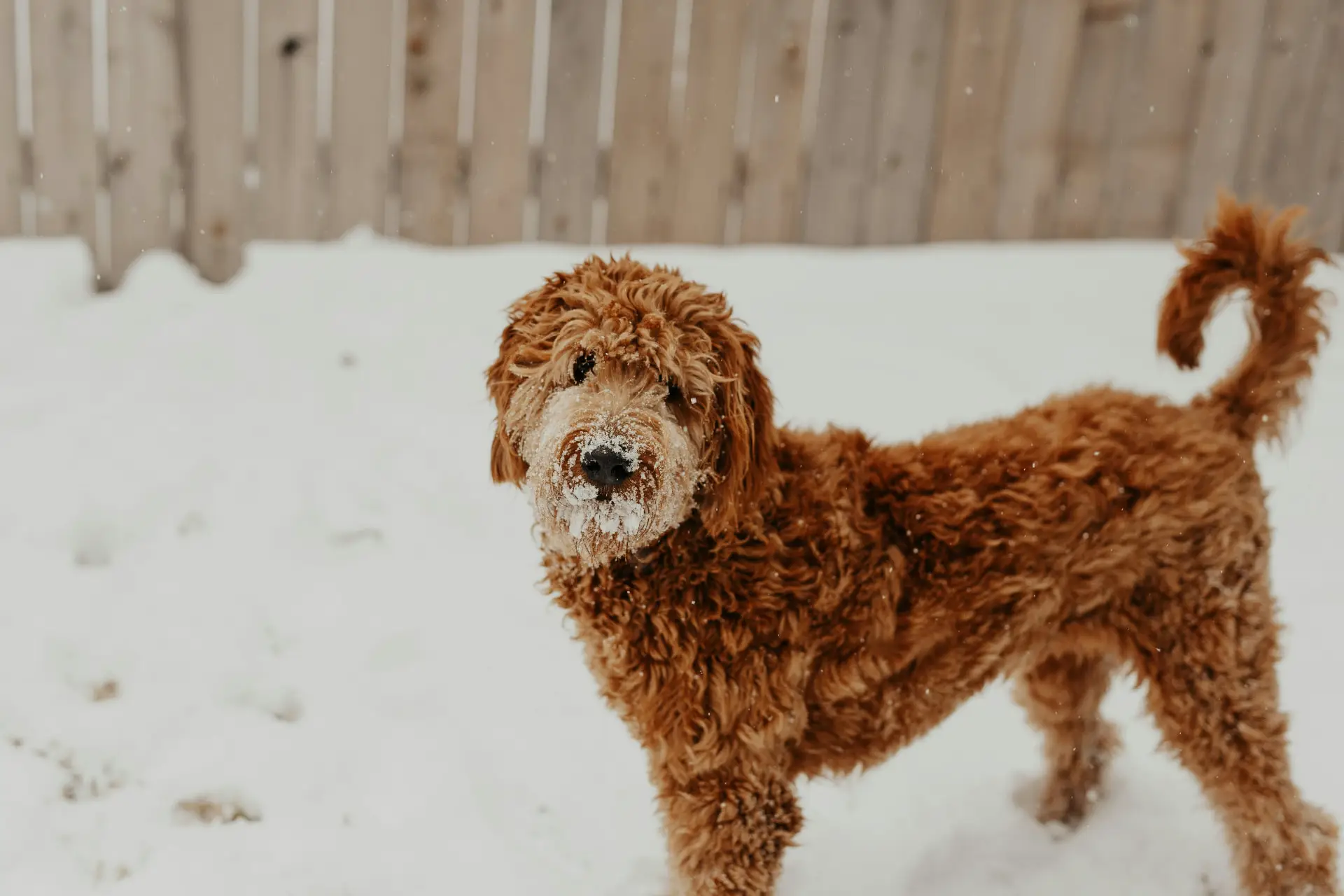
Size is one of the largest single drivers of a Goldendoodle's insurance premium, usually a $10–$25 monthly gap between a 20-pound Mini and a 70-pound Standard on identical coverage terms. The gap is not arbitrary. It reflects drug dosing by body weight, longer anesthesia and surgical times, different orthopedic risk, and a measurable difference in lifespan. This guide breaks down what Mini and Standard Goldendoodle owners actually pay, why, and which coverage structure fits each size.
| Factor | Mini (15–30 lbs) | Standard (45–90 lbs) |
|---|---|---|
| Premium at enrollment | $25–$45/mo | $35–$65/mo |
| Premium at age 10 | $55–$85/mo | $80–$130/mo |
| Lifetime premium total | $5,500–$8,500 (14–16 yrs) | $6,500–$11,000 (10–14 yrs) |
| Top orthopedic risk | Patellar luxation ($1,500–$4,000/knee) | Hip dysplasia ($5,000–$14,000 bilateral) |
| Costliest emergency | Dental extractions ($800–$2,500) | Bloat/GDV surgery ($5,000–$8,000) |
| Best plan structure | $250 deductible, 80–90%, $10K–$15K limit | $500 deductible, 80%, unlimited limit |
Figures summarize published plan documents and national cost data reviewed in . Carrier terms, limits, and pricing change without notice and vary by state, pet age, and plan settings. This is not a quote or an offer of insurance — verify details directly with the provider.
How Much More Does a Standard Goldendoodle Cost to Insure Than a Mini?
A Mini Goldendoodle (15–30 lbs) averages $25–$45 per month with 80% reimbursement and a $250 deductible, while a Standard Goldendoodle (45–90 lbs) averages $35–$65 per month on identical terms. That works out to a 30–45% premium difference, or roughly $120–$240 more per year, widening as the dog ages into higher rate bands.
- Mini (15–30 lbs): $25–$45/month at enrollment; $55–$85/month by age 10.
- Medium (30–45 lbs): $30–$55/month at enrollment; $65–$100/month by age 10.
- Standard (45–90 lbs): $35–$65/month at enrollment; $80–$130/month by age 10.
Over a full lifetime the compounding matters more than the starting quote. Because Minis both cost less per month and typically live 2–3 years longer, lifetime premium totals converge more than the monthly numbers suggest: roughly $5,500–$8,500 for a Mini across 14–16 years versus $6,500–$11,000 for a Standard across 10–14 years.
Why Do Larger Goldendoodles Cost More to Insure?
Insurers price size because size changes both the frequency and the severity of claims. Four mechanisms account for nearly all of the gap.
- Weight-based drug dosing: Anesthesia, antibiotics, chemotherapy, and pain control are dosed per kilogram. A 70-lb dog's medication bill is roughly three times a 20-lb dog's for the same protocol.
- Longer, more complex surgery: Orthopedic repairs on large dogs require bigger implants and longer operating and anesthesia time. An ACL repair runs $3,500–$5,500 for a Standard versus $2,500–$4,000 for a Mini.
- Different orthopedic risk: Standards carry meaningfully higher hip and elbow dysplasia, ACL rupture, and bloat (GDV) risk. Bloat alone is a $5,000–$8,000 emergency surgery and is far rarer in Minis.
- Shorter lifespan, earlier claims: Large dogs age faster, so age-related claims start earlier and cluster into fewer policy years, raising annual claim cost.
Which Conditions Differ Between Mini and Standard Goldendoodles?
The two sizes do not simply carry the same risks at different prices — they carry different risks, which should change how you structure a policy.
- Mini-skewed conditions: Patellar luxation ($1,500–$4,000 per knee), dental disease and extractions ($800–$2,500), progressive retinal atrophy, tracheal and airway issues, and hypoglycemia in puppies.
- Standard-skewed conditions: Hip and elbow dysplasia ($5,000–$14,000 bilateral), ACL/cruciate rupture ($3,500–$5,500 per knee), bloat/GDV ($5,000–$8,000), Addison's disease, and cancer at higher rates.
- Shared across sizes: Environmental and food allergies, chronic ear infections, hypothyroidism, and skin conditions. These are the high-frequency claims that affect every Goldendoodle regardless of weight.
The practical implication: Mini owners face more frequent moderate claims in the $800–$4,000 range, while Standard owners face fewer but much larger claims that can exceed $10,000 in a single year.
What Coverage Structure Fits Each Size?
Because their risk shapes differ, the same policy is not optimal for both sizes. Match the structure to the claim profile.
- Mini Goldendoodle: Prioritize a low deductible ($250) and high reimbursement (80–90%). A $10,000–$15,000 annual limit is typically sufficient, since the most expensive realistic year, bilateral patella surgery plus allergy care — lands around $6,000–$9,000.
- Standard Goldendoodle: Prioritize an unlimited or $20,000+ annual limit above all else. Bilateral hip dysplasia, bloat surgery with complications, or a cancer protocol can each cross $10,000 in one policy year. A $500 deductible with 80% reimbursement and no annual cap is usually a better trade than a $250 deductible with a $10,000 cap.
- Both sizes: Enroll before the orthopedic waiting period matters. Many carriers apply a 6–12 month wait on hips and knees, the exact conditions each size is predisposed to.
If you do not yet know your puppy's adult size, quote the larger estimate. Carriers set premiums by current weight and adjust upward as your dog grows, and a Mini-labeled puppy that matures at 40 pounds will be re-rated. Our Goldendoodle weight chart helps predict adult size from puppy weight, and the generations guide explains how the Poodle parent's size drives the outcome.
Does a Mini Goldendoodle Still Need Insurance If Premiums Are Lower?
Yes — the case for insuring a Mini is nearly as strong as for a Standard, just for different reasons. Minis are less likely to file a single $12,000 claim, but they live longer, which means more total policy years in which allergies, dental disease, patellar luxation, and eye conditions can appear. Bilateral patella surgery plus a decade of allergy management commonly totals $8,000–$15,000, against lifetime Mini premiums of $5,500–$8,500.
The lower premium also makes richer coverage affordable: for a Mini, upgrading from 70% to 90% reimbursement often costs $6–$9 a month, an easier decision than the same upgrade on a Standard. Owners choosing between the cheapest and the strongest structure should read what you give up with cheap Goldendoodle insurance before deciding, and Mini owners should review breed-specific risks in our Mini Goldendoodle health problems guide.
How Do You Get an Accurate Quote for Your Goldendoodle's Size?
Quotes are driven by current weight, age, ZIP code, and the deductible, reimbursement, and annual limit you select, not by the "Goldendoodle" label. To compare fairly, hold the three coverage variables constant across every carrier you quote, then compare the premium.
- Quote every carrier at the same deductible, reimbursement percentage, and annual limit.
- Ask whether exam fees are included; on frequent small claims this changes real reimbursement by 20–30%.
- Ask for the age-band increase schedule — a Standard's premium roughly doubles by age 10 and the increase curve varies by carrier.
- Confirm the orthopedic waiting period, which matters most for the exact conditions your dog's size predisposes it to.
Estimate your own number by size and age in the Goldendoodle cost calculator, see the state-level ranges on our insurance by state pages, and work through plan selection with the buyer's guide.
Frequently Asked Questions
How much more does it cost to insure a Standard Goldendoodle than a Mini?
Standards average $35–$65/month versus $25–$45/month for Minis on identical terms (80% reimbursement, $250 deductible) — a 30–45% difference, or roughly $120–$240 more per year. The gap widens with age, with Standards reaching $80–$130/month by age 10 versus $55–$85 for Minis.
Why do larger Goldendoodles cost more to insure?
Medications and anesthesia are dosed by body weight, so a 70-lb dog costs roughly three times a 20-lb dog for the same protocol. Large-dog surgery takes longer and uses bigger implants, Standards carry higher hip dysplasia, ACL, and bloat risk, and their shorter lifespan concentrates age-related claims into fewer policy years.
Which health conditions differ between Mini and Standard Goldendoodles?
Minis skew toward patellar luxation ($1,500–$4,000 per knee), dental disease, progressive retinal atrophy, and airway issues. Standards skew toward hip and elbow dysplasia ($5,000–$14,000 bilateral), ACL rupture, bloat/GDV ($5,000–$8,000), Addison's disease, and cancer. Allergies, ear infections, and hypothyroidism affect both sizes equally.
What insurance plan structure is best for each Goldendoodle size?
For a Mini, prioritize a $250 deductible and 80–90% reimbursement; a $10,000–$15,000 annual limit is usually sufficient. For a Standard, prioritize an unlimited or $20,000+ annual limit above all else, since a single year of bilateral hip surgery, bloat, or cancer treatment can exceed $10,000.
Wondering what coverage looks like for your Goldendoodle?
Compare plan options in a couple of minutes, or estimate your monthly premium first.
Get a free Goldendoodle insurance quote · Estimate your premium
Advertiser disclosure: GoldendoodleInsurance.com is an independent comparison website — not an insurance company, agency, or producer. We do not sell, issue, or bind policies. We may earn a commission when you click carrier links, at no cost to you. Advertising Disclosure · Editorial Policy.
Sources & References
Premium figures are sample quotes from public provider quoting tools and are illustrative only; medical details are summarized from the veterinary references below and are educational, not veterinary advice.
- Orthopedic Foundation for Animals (OFA). Hip Dysplasia Statistics by Breed and Size.
- North American Pet Health Insurance Association (NAPHIA). State of the Industry Report: Claim Cost Benchmarks.
- Merck Veterinary Manual. Gastric Dilation and Volvulus in Dogs.
- American Kennel Club (AKC). Patellar Luxation in Dogs.
Pricing sources and data vintage
Cost figures on this page are national ranges, not quotes. Each one below is tied to a named publisher and the date we last verified it. Pricing data set: . Next scheduled re-verification: February 2027.
| Figure | Published range | What it covers | Source & date verified |
|---|---|---|---|
| Monthly premium, Goldendoodle accident & illness plan | $25–$70/month | Quotes sampled across ten U.S. carriers for Mini/Medium/Standard profiles at 80–90% reimbursement, $250–$500 annual deductible. Mid-range figure ≈ $45/month. | NAPHIA (North American Pet Health Insurance Association) — State of the Industry Report — average U.S. premiums by coverage type (2026 report). Verified Aug 2026. |
| Hip dysplasia surgery (FHO or total hip replacement) | $3,500–$7,000 per hip | Specialty and teaching-hospital surgical pricing, single hip, including imaging, implant, anesthesia, and post-op rehab. | American Veterinary Medical Association (AVMA) — Cost of veterinary care references / orthopedic procedure benchmarks (2026 guidance). Verified Aug 2026. |
| Bloat (GDV) emergency surgery | $3,000–$7,500 | Emergency gastric decompression, derotation, and gastropexy with 24-hour critical care. Overnight ICU drives the upper end. | Merck Veterinary Manual — Gastric dilation and volvulus in dogs (Current edition, 2026). Verified Aug 2026. |
| Addison's disease (hypoadrenocorticism) maintenance | $200–$500/month | Desoxycorticosterone pivalate injections or fludrocortisone plus prednisone, with periodic electrolyte monitoring. Dose scales with body weight. | American College of Veterinary Internal Medicine (ACVIM) — Consensus statement on canine hypoadrenocorticism (Consensus statement, latest revision). Verified Aug 2026. |
| Lifetime veterinary spend, Goldendoodle | $15,000–$30,000 | Routine care plus expected illness and emergency claims across a 10–14 year lifespan, before insurance reimbursement. | American Veterinary Medical Association (AVMA) — Pet ownership and cost-of-care data (2026 guidance). Verified Aug 2026. |
Veterinary pricing varies by region, clinic type, and case complexity; insurance premiums vary by ZIP code, age, deductible, and reimbursement level. Treat every range as a planning benchmark and confirm current pricing with your veterinarian and current premiums with the provider. Our sourcing rules are documented in the editorial policy.